








 "How 5 men hijacked Indian Airlines flight 814 – Firstpost")
India faced one of its most serious security lapses on December 24, 1999, when hijackers took control of Indian Airlines flight 814. The flight travelling from Kathmandu to Delhi, with 191 people onboard, faced a harrowing experience when it was taken to Kandahar instead of its usual destination. On this day in 1979, the Soviet Union invaded Afghanistan under the pretext of upholding the Soviet-Afghan Friendship Treaty of 1978
One of the most serious aviation and security crises of India took place on December 24, 1999, when hijackers took control of Indian Airlines Flight 814. A routine flight from Kathmandu to Delhi witnessed a harrowing week-long international standoff, forcing an agonising dilemma.
If you are a history geek who loves to learn about important events from the past, Firstpost Explainers’ ongoing series,
History Today will be your one-stop destination to explore key events.
On this day in 1979, the Soviet Union invaded Afghanistan, launching a military invasion that lasted nearly a decade and a half. Meanwhile, Norad’s Santa tracking service began on December 24, 1955.
Here is all that took place on this day across the world.
Hijackers took control of the Indian Airlines IC-814 flight
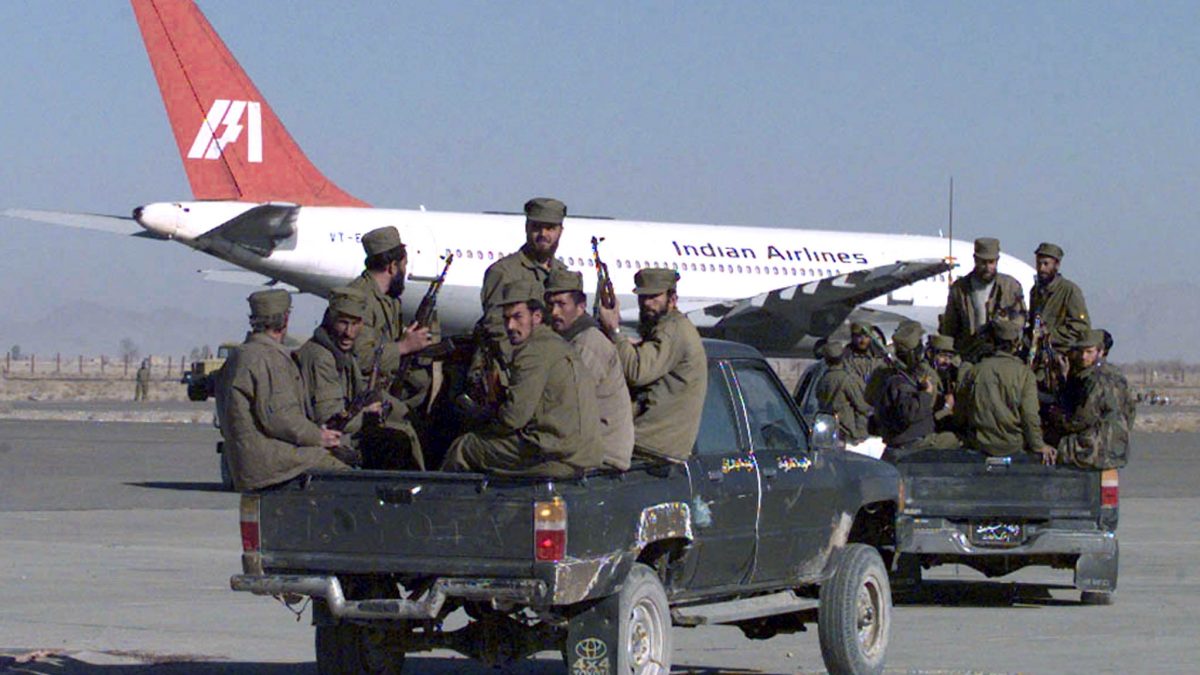
Hijackers took control of Indian Airlines Flight 814 on December 24, 1999 which triggered one of the most serious aviation and security crises in India’s history. The Airbus A300 aircraft, which was flying from Nepal’s Kathmandu to New Delhi with 176 passengers and 15 crew members on board, was hijacked shortly after entering Indian airspace.
Five armed hijackers seized the plane and forced the pilot to divert the flight. The aircraft initially landed in Amritsar, where Indian authorities struggled to contain the situation and refuel the plane in time to stop it. The hijackers then ordered the plane to fly to Lahore, but were denied permission to land. They landed in Dubai, where some passengers were released, before continuing to Kandahar, which was then under Taliban control.
The hijackers held passengers hostage for seven days while demanding the release of jailed militants in India. Conditions inside the aircraft were harsh, with limited food, rising fear and constant uncertainty. During the standoff, a passenger named Rupin Katyal was murdered by the hijackers. This increased pressure on the Indian government to resolve the crisis.
After intense negotiations, the Indian government agreed to release three jailed militants, including Masood Azhar, Ahmed Omar Saeed Sheikh and Mushtaq Ahmed Zargar, in exchange for the safe return of the hostages. The passengers and crew were freed on December 31 bringing the ordeal to an end. Masood Azhar later founded the terrorist group Jaish-e-Mohammed.
Soviet Union invaded Afghanistan
The Soviet Union invaded Afghanistan on this day in 1979. Soviet troops crossed the border under the pretext of supporting Afghanistan’s communist government, which was facing internal rebellion and growing instability.
Until then Afghanistan had been ruled by the People’s Democratic Party of Afghanistan (PDPA), a communist party that came to power through a coup. Its radical reforms sparked widespread resistance. By late 1979, the Afghan government was losing control, and internal power struggles weakened its leadership.
Moscow feared that the collapse of the Afghan communist regime would reduce Soviet influence in the region and potentially invite Western or Islamist influence near its southern border. On December 24, Soviet forces began entering Afghanistan in large numbers. Days later, they carried out a covert operation in Kabul, assassinating Afghan leader Hafizullah Amin and installing Babrak Karmal as the new head of government.
What the Soviet leadership expected to be a short stabilising mission quickly turned into a prolonged and costly war as Afghan resistance fighters, also known as the mujahideen, waged a guerrilla war against Soviet troops. The fighters drew support from the United States, Pakistan, Saudi Arabia and other countries.
The United States imposed sanctions on the Soviet Union and led a boycott of the 1980 Moscow Olympics. The conflict drained Soviet resources, damaged its international reputation and contributed to internal dissatisfaction at home.
Norad’s Santa tracking service began
Norad’s Santa tracking service began on December 24, 1955, as the result of a simple mistake that turned into a beloved Christmas tradition. A Sears department store ran a holiday advertisement inviting children to call Santa Claus, the mistake – a misprinted phone number. This confusion connected callers to the Continental Air Defence Command or Conrad, the Cold War–era military organisation that later became Norad.
On Christmas Eve, the phones at Conrad’s operations centre in Colorado Springs began ringing nonstop with calls from children asking to speak with Santa. Rather than dismiss the calls, Colonel Harry Shoup chose to play along. He instructed his staff to give children updates on Santa’s location, using radar systems meant to track potential Soviet threats.
The lighthearted response quickly caught the attention of the media with local newspapers reporting that the US military was “tracking Santa Claus,” and the story spread across the country. What began as an improvised gesture soon became an annual event. When Norad replaced Conad in 1958, it continued the tradition, formally adopting Santa tracking as part of its Christmas Eve outreach.
Over the decades, the programme evolved with technology. Radar reports were joined by satellite imagery, infrared sensors and fighter jet “escorts” to follow Santa’s sleigh across the globe. In the internet age, Norad launched a website and later mobile apps, allowing millions of families worldwide to follow Santa’s journey in real time. Volunteers answer calls, emails and messages from children in multiple languages.
This Day, That Year
-
Idris I became the first king of newly independent Libya in 1951.
-
General Dwight D Eisenhower was appointed Supreme Commander of the Allied Expeditionary Force during World War II in 1943.
-
The United States and Great Britain signed the Treaty of Ghent in Belgium in 1814.
With inputs from agencies
End of Article