

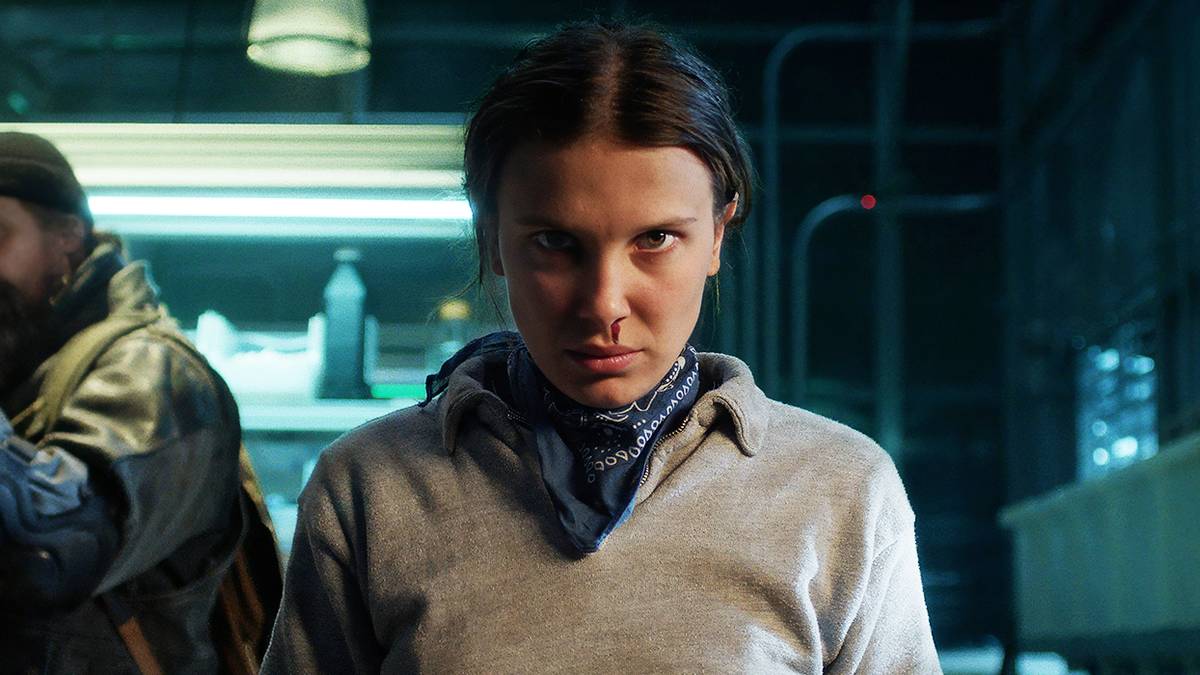
When Netflix welcomes Stranger Things fans back to Hawkins for the show’s final run of episodes, it will be rolling out a streaming red carpet worth a cool $460 million. That’s enough money to purchase 255 private islands owned by director Francis Ford Coppola or to feed every person in Japan one box of Eggo waffles. (No, really, we’ve done the math.) And here’s the kicker: unlike a movie, there’s no box office to cover the bill. Every dollar spent making a show as gargantuan as The Duffer Brothers’ 80s-drenched ode to childhood has to earn its keep by keeping you subscribed, stopping you from canceling, or keeping online chatter about the Upside Down at the top of our feeds.
That’s the tightrope of modern TV, but it’s a budgetary balancing act that doesn’t get talked about enough. Movie openings get dissected like crime scenes, with trades and Twitter-certified critics ready to call a hit or a flop after just one weekend. TV, on the other hand, gets a gentler pass, even though a streaming show’s fate can hinge just as heavily on how quickly viewers click, binge, or bail. A show like Stranger Things, with its breakout first season, basically insulated itself from cancellation threats early on, but its ever-ballooning budget can (and often does) wreak havoc on other series in a streamer’s lineup. Just look at Amazon. The Lord of the Rings: The Rings of Power, the current titleholder for the most expensive TV show ever made, lives on thanks to its superior IP and CGI spectacle, while another expensive fantasy series sharing its platform, The Wheel of Time, is sacrificed for the bottom line.
It’s all a numbers game – a pricey one – and its ultimate cost comes at the fans’ expense. What does it mean that TV has effectively changed tax brackets? Bigger explosions and more spin-offs? Maybe, but also a shrinking appetite for smaller, riskier fare, the kind of creative diversity at fingertips’ reach that streaming used to be known for. If the small screen keeps buying into Hollywood’s blockbuster model, what exactly does it lose? How long can it really survive?
The Era of the $50 Million Episode Is Here, Thanks to Streaming TV
TV has been on a spending spree for years, but at this point, the numbers are getting ridiculous. In the cable era, a prestige drama might run $3 to $4 million per episode – enough to hire a few A-list actors and build a decent set, but not much more. There were outliers, shows like E.R., Friends, and The Sopranos that more than earned their heftier price tags through seasons’ worth of high-performing storylines that drew tens of millions of eyes per week. But even a cultural behemoth like Lost, which was dubbed overpriced for its time, was only rumored to cost $4 million per episode. Streaming changed that cash flow contest: series like The Morning Show, House of the Dragon, and Severance cost $10–20 million per episode now, double or even triple their network predecessors. They trade robust writer’s rooms for multi-million dollar deals with creative figureheads, dependable working actors for star power, practical effects and small sets for CGI and glossy cinematography, and seasoned showrunners for big-name movie directors.
TV, in other words, has gone full Hollywood, and though it’s easy to pick on Stranger Things — a show that’s taken eons to finish and reportedly bills $30 million per episode in its latest season, it’s not an exception in today’s streaming landscape… it’s the norm, the very expensive norm. The Rings of Power flirts with $58 million per episode, while Amazon’s blink-and-miss-it flop Citadel racked up $50 million an episode. The Mandalorian, Andor, One Piece, The Last of Us — all push a minimum of $15 million per episode, but most ring in on the higher end of $20-25 million for an hour’s worth of storytelling. TV isn’t just TV anymore – it’s mini-blockbusters delivered straight to your living room.
Outside of the spreadsheets, the creative line between cinema and television has practically evaporated, too. We’re talking sprawling VFX-heavy fantasy worlds, intricate period dramas, and cinematic camerawork that feels made for a multiplex screen, not a 55-inch living room set. The emphasis is on spectacle, on nabbing the “event series” label rather than stretching out a story over several weeks, earning fans’ investment, and rewarding it with higher episode counts and season renewals.
TV used to be something to sit with, to keep coming back to. Now, a show appears and vanishes in one 24-hour news cycle, living or dying in the same way a box office hopeful would. And that’s just a bad business model because, and this might come as a shock to some of the streaming suits, TV is not film. It doesn’t have the same cushion, the same bar for forgiveness that movies do. Instead, every dollar has to justify itself through subscribers, retention, average revenue per user (ARPU), ad revenue, licensing, and merchandising. The bigger the spend, the smaller the margin for error: one misstep in subscriber draw or engagement, and a show can be dead and buried before fans even knew it was headed for the chopping block.
High-cost tentpoles also monopolize attention and marketing. The more a streamer invests in making sure a mega-hit like Stranger Things actually performs, the less room there is for mid-tier or experimental content to breathe. Smaller shows can get lost in the shadow of these juggernauts – think niche thrillers, quirky dramedies, or inventive sci-fi that never makes it past a season or two. Fans get a small-screen cinematic experience, but the trade-off is fewer chances to stumble across weird, unexpected gems with something fresh and original to say.
Your Streaming Subscription Is Funding Dragons and Killing the Weird Stuff
All this talk about spending might sound like inside baseball until you realize it’s reshaping what actually lands in your queue. The bigger the budget, the smaller the risk appetite. Streamers are stacking their decks with sure things: sequels, prequels, reboots, and spinoffs that come preloaded with hashtags and built-in fandoms. And while that might mean flashier trailers and fancier finales, it also means there’s less oxygen for the wonderful curveballs that once made streaming exciting. The quirky mid-budget gems – your Russian Dolls, your Search Partys, your “how did this even get made?” experiments – are becoming endangered species in the age of fully-grown dragons and Tolkien myths.
For viewers, it’s a trade-off between thrill and variety. Sure, the mega-budget shows look stunning – every frame screams “we spent money on this” – but when everything is fighting to be an event, the smaller surprises start disappearing. The binge-drop model is a mess, with streamers now realizing that more all at once doesn’t guarantee a particularly healthy shelf life. And, of course, someone has to pay for all this excess. Spoiler: it’s us. As production costs soar, streamers are quietly passing the bill to subscribers through higher monthly prices, ad-supported “budget” tiers, and whispers of a future where exclusive premieres or early access could come with a pay-per-view-style surcharge. The pitch is always the same: you’re not just watching TV, you’re part of the event. But that event keeps getting less affordable, less accessible. At some point, audiences start wondering whether prestige television is worth the premium — whether those once-cursed cable packages weren’t the smarter choice after all. Everything is big, loud, wallet-squeezing, and sadly, more predictable than ever.
Prestige TV Doesn’t Have To Equal a Hefty Price Tag
We’ll dial down the pessimism for a second to admit that TV, as a whole, is still good, and not every platform is lighting money on fire for bragging rights. Apple TV seems to have cracked its code: the big price tags are still attached, but it commits to fewer series in its lineup so that they can build them up to be seasons-long staples. They’re proof that a sharp script and killer casting can do wonders in terms of tempting people to actually talk about your show. HBO’s been performing that dance for decades. The Last of Us and House of the Dragon feed the spectacle crowd, but Hacks, The Pitt, and Industry keep things grounded, economical, witty, and human-sized. It’s not about outspending the competition; it’s about curating a slate that feels rich, versatile, and interesting.
The takeaway? Streaming doesn’t have to be an arms race. You don’t need a Marvel-sized budget to make people care, just a story that earns the scroll-stop. Maybe the next big hit won’t come from a sprawling fantasy realm or a comic book spin-off, but from something smaller, stranger, and (dare we say it?) cheaper.

- Release Date
-
2016 – 2025
- Network
-
Netflix
- Directors
-
Matt Duffer, Ross Duffer, Andrew Stanton, Frank Darabont, Nimród Antal, Uta Briesewitz
- Writers
-
Kate Trefry, Jessie Nickson-Lopez, Jessica Mecklenburg, Alison Tatlock
