



Last Updated:
The most direct impact would fall on nationals of the 12 countries facing full restrictions under Donald Trump’s travel ban.


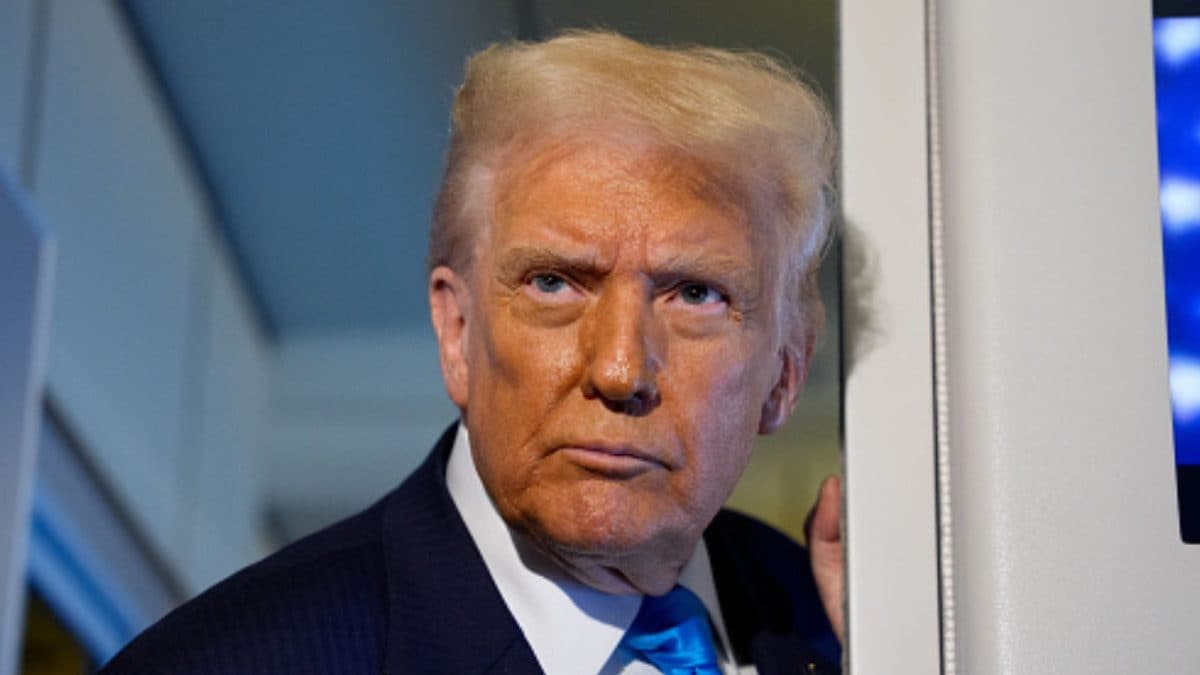
US President Donald Trump. (Getty)
The Donald Trump administration is preparing a sweeping new immigration policy that could sharply restrict green cards and other immigration benefits for people from countries already covered by White House’ travel ban. Draft Department of Homeland Security (DHS) documents reviewed by The New York Times outline a proposal that would direct US Citizenship and Immigration Services (USCIS) to treat “country-specific factors” from the travel ban as significant negative marks when evaluating certain applications.
Although the guidance is still in draft form and has not been finalised, the move would mark one of the most expansive shifts in legal immigration policy in years. Doug Rand, a former senior USCIS official in the Joe Biden administration, described it as a “radical change,” arguing that the government is “trying to reach inside the United States and overturn the settled expectations of people who have already been here.”
What Draft Policy Would Do?
Under the proposed framework, travel-ban indicators would automatically count against applicants when USCIS officers consider green cards, asylum, humanitarian parole and other discretionary immigration benefits. The change would not apply to citizenship applications.
Currently, officers assess factors such as community ties, criminal history, credibility and humanitarian circumstances. The draft guidance would insert nationality-based risk into these decisions, making the applicant’s country of origin a determinative factor even if they have lived in the US for years, have no criminal record and meet all existing requirements.
Michael Valverde, a former USCIS official with more than two decades of experience, told The New York Times that it remains unclear whether applicants could realistically overcome such negative factors, or whether the policy would function as a “de facto ban” for people from countries on the list.
Who Is Affected?
The most direct impact would fall on nationals of the 12 countries facing full restrictions under Donald Trump’s travel ban. These include Afghanistan, Myanmar, Chad, the Republic of Congo, Equatorial Guinea, Eritrea, Haiti, Iran, Libya, Somalia, Sudan and Yemen. Another seven countries- Burundi, Cuba, Laos, Sierra Leone, Togo, Turkmenistan and Venezuela- currently face partial restrictions, preventing their citizens from permanently settling in the US or obtaining certain visas.
According to DHS, many of these countries do not provide sufficient identity-verification data, lack reliable passport security or cannot supply documentation that USCIS considers fully verifiable. Former USCIS policy analyst Sarah Pierce argued that the policy would inevitably increase the number of denials and added that applying such rules to people already living in the US could make the move “more legally vulnerable.”
Why Trump Administration Says It Is Needed?
Donald Trump has defended the travel ban as a national security measure, saying that a terrorist attack in Boulder, Colorado, “underscored the extreme dangers” of allowing foreign nationals who are not “properly vetted” to enter the country. DHS drafts reiterate these concerns, citing inadequate documentation and identity-verification standards in the countries listed.
Who Might Still Be Exempt?
Previous exemptions under the travel ban covered people with existing visas, green-card holders, certain religious minorities from Iran, Afghans eligible for Special Immigrant Visas and individuals granted waivers in the national interest. Athletes travelling for the 2026 World Cup or the 2028 Olympics were also exempt.
However, the new policy could still apply to many of these groups when they seek future immigration benefits such as green-card renewals or adjustments of status, unless new exemptions are added. Immigration lawyers warn that long-term residents who assumed they were safe under earlier exemptions could now see their cases reopened or re-evaluated under harsher criteria.
What Happens Next?
The draft policy is still under review and could change before it is issued. If finalised, it would represent one of the Donald Trump administration’s most far-reaching moves against legal immigration, extending the logic of the travel ban into domestic adjudications and affecting people already living legally in the United States.
Delhi, India, India
November 16, 2025, 13:48 IST
Read More
